Scrolling Through Suffering: Understanding Vicarious Trauma in the Age of Social Media (2025-2026)
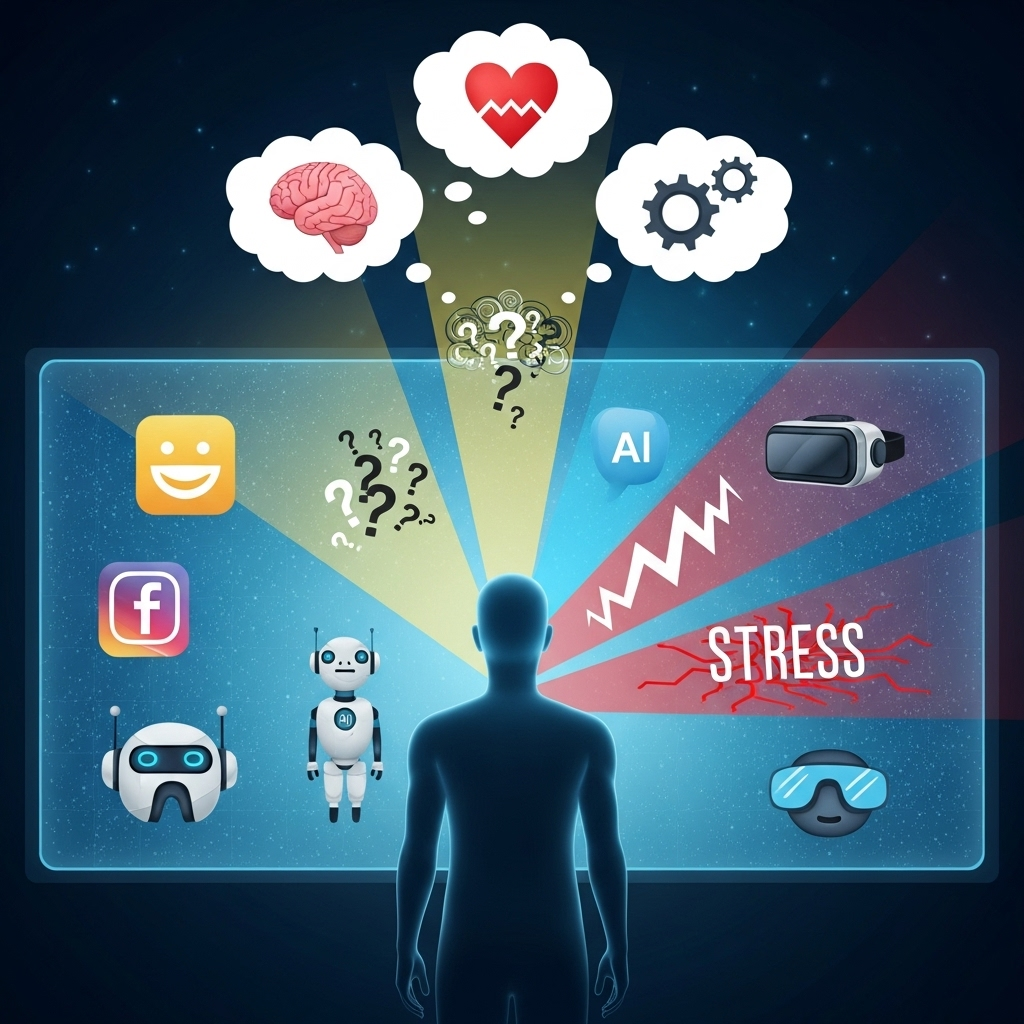
As a therapist practicing in 2026, I’m witnessing something unprecedented: clients arriving in my office not because of what happened to them directly, but because of what they’ve witnessed on their screens.
The Invisible Wounds We Carry
I remember when “vicarious trauma” was a term reserved for professional contexts—something we discussed in supervision with fellow therapists, social workers, and first responders who counseled traumatized individuals. We knew that bearing witness to others’ suffering could leave psychological scars on the helper. But in 2025 and 2026, the landscape has shifted dramatically. Today, vicarious trauma isn’t limited to those on the front lines of care. It has become a widespread phenomenon affecting anyone with a smartphone and a social media account.
According to recent research from Boston University, we’re seeing a concerning surge in vicarious trauma—distress from secondhand exposure to gruesome events through news, screens, or counseling traumatized people. What once required proximity or professional involvement now arrives unbidden in our feeds, autoplay after autoplay.
Gen Z: The First Generation Born into Collective Digital Trauma
In my practice, Gen Z clients present with a particular kind of exhaustion. They’re engaged, informed, and deeply justice-minded—67% of adult Gen Zers report feeling overwhelmed by news and events, compared to 54% of teen Gen Zers. These young adults want to shape the future, feel responsible for their communities, and consume more news than any other type of information. But this constant connection comes at a steep price.
One of my clients, a 24-year-old activist, described it perfectly: “I feel like I’m supposed to witness everything. If I’m not staying informed about Gaza, Ukraine, climate disasters, police brutality, mass shootings—then I’m being complicit. But I can barely sleep anymore. Every time I close my eyes, I see those images.”
This is the paradox facing Gen Z: their conscientiousness and engagement are undermining their mental health. Recent surveys reveal that 75% are stressed about mass shootings, 58% about climate change, and 57% about immigrant families being separated. These aren’t abstract concerns—they’re delivered in vivid, high-definition detail, multiple times daily.
The Neuroscience of Doomscrolling: Why We Can’t Look Away
“Why can’t I just stop scrolling?” This is perhaps the most common question I hear in therapy sessions. The answer lies in our neurobiology, not our willpower.
Research on doomscrolling reveals that our brains are being fundamentally altered by constant exposure to negative content:
What happens in your brain when you doomscroll:
Altered Neural Pathways: Repeated exposure to negative information strengthens neural pathways associated with fear and anxiety, making your brain more likely to trigger these responses in the future
Overactive Amygdala: The amygdala, which processes fear and anxiety, becomes hyperactive during doomscrolling, making you more sensitive to stress
Impaired Prefrontal Cortex: The part of your brain responsible for decision-making and impulse control suffers under chronic stress, affecting your ability to regulate emotions and think rationally
Reduced Attention Span: Constant exposure to short, attention-grabbing content makes it harder to focus on complex tasks or engage in deep conversation
This isn’t addiction in the traditional sense—it’s your nervous system stuck in a state of hypervigilance, continuously scanning for threats. Your brain evolved to prioritize survival, and in our ancestral environment, knowing about dangers kept us alive. But evolution never prepared us for a world where we’re exposed to global catastrophes 24/7.
The Reality of Secondary Traumatic Stress
What makes vicarious trauma particularly insidious is that it can produce the same mental and physical responses as if you experienced the traumatic event directly. This isn’t hyperbole—it’s documented clinical reality.
In my practice, I’ve seen clients develop:
Intrusive thoughts and flashbacks of events they only witnessed online
Hypervigilance and constant scanning for danger
Emotional numbing and disconnection from loved ones
Physical symptoms including headaches, muscle tension, elevated blood pressure, and sleep disturbances
Difficulty regulating emotions, oscillating between numbness and overwhelming distress
For individuals with existing trauma histories, the effects are compounded. As one trauma specialist notes, “doomscrolling can trigger traumatic memories, causing flashbacks, nightmares, and heightened anxiety.” The negative news becomes a re-traumatization mechanism, keeping the nervous system locked in survival mode.
Social Proximity and Digital Trauma
One critical insight from recent research challenges the idea that screen distance equals emotional distance. BU researcher Laura Captari explains that “people’s social proximity is going to impact their experience of seeing violence through social media. So if they are part of that community or hold an identity overlapping with the people impacted, that’s going to activate their nervous system.”
This means that vicarious trauma isn’t evenly distributed. When a young Black client watches footage of police brutality, when a queer client sees news of violence at an LGBTQ+ venue, when a Muslim client scrolls through dehumanizing rhetoric—these aren’t just “upsetting news stories.” They register as direct threats to safety and belonging.
The Polarization Problem: Trauma Without Community
Perhaps most concerning is what happens after exposure to traumatic content. As BU’s Steven Sandage notes, “A trauma response is a survival mechanism… For any of us that feel under threat, it’s gotten stuck in place as a hypervigilant alarm response. We can expect that it’s going to be harder to reset that in environments where there’s lots of polarization.”
Historically, humans processed collective trauma through communal rituals, shared grief, and embodied connection. Today, we’re increasingly isolated in our digital consumption, lacking the “relational, embodied spaces where we can talk about it and try to make meaning of this in relationship with others,” as Captari emphasizes.
This isolation is particularly acute for young adults, who have some of the highest rates of mental health vulnerability and lowest rates of mental health service utilization. They’re facing enormous stress with few resources to metabolize it.
What Can We Actually Do? A Therapist’s Practical Guide
When clients ask me what to do, I don’t recommend simply “unplugging”—that’s neither realistic nor helpful in 2026. Instead, I focus on developing wisdom and intentionality around media consumption.
1. Cultivate Metacognitive Awareness
Before reaching for your phone, pause and ask:
What am I hoping for when I open social media?
What need am I trying to meet? (Connection? Distraction? Information? Amusement?)
How are my mind and body reacting to what I’m seeing?
This isn’t about judgment—it’s about awareness. Notice if you’re entering a freeze state, watching something disturbing on repeat, trying to wrap your head around the incomprehensible.
2. Build Self-Compassion and Differentiation
Research shows that therapists with greater self-compassion and “differentiation of self”—the ability to witness suffering without becoming fused with it—were at less risk of becoming traumatized during the pandemic. This isn’t about detachment or callousness; it’s about maintaining healthy boundaries between others’ experiences and your own.
Practice saying: “This is devastating, and I care deeply. And I am here, in my body, in this moment, and I am safe right now.”
3. Create Embodied, Relational Spaces
Your nervous system cannot heal in isolation. You need:
Real-time, in-person connection with trusted people
Movement and connection with nature
Practices that help you feel present in your body (breathwork, yoga, walking, dancing)
Social media can facilitate connection, but “if most of our lives are lived there, it impoverishes and diminishes us,” as Captari warns.
4. Curate Your Digital Environment
You have more control than you think:
Set time limits on news and social media apps
Curate your feed to include sources of joy, beauty, and hope alongside necessary information
Turn off autoplay and push notifications
Create tech-free zones in your home and schedule
Unfollow or mute accounts that consistently trigger distress without providing value
5. Recognize When Professional Help Is Needed
Seek support if you’re experiencing:
Persistent intrusive thoughts or flashbacks
Increased anxiety, depression, or hopelessness
Sleep disturbances or nightmares
Emotional numbness or disconnection
Hypervigilance that interferes with daily life
Physical symptoms (headaches, muscle tension, digestive issues)
The Courage to Feel and the Wisdom to Protect
I want to be clear: staying informed and engaged is not inherently harmful. The young people who come to my office genuinely want to face what’s happening in the world—a courageous commitment to not turning away from suffering. This impulse toward witness and justice is admirable.
But as Sandage notes, “if it’s happening in a context of isolation, with few relationships or resources in which to metabolize all that, it’s not a good recipe.”
The question isn’t whether to care about the world’s suffering. The question is: How can you care effectively without destroying yourself in the process?
Moving Forward: A Call for Systemic Support
As mental health professionals, we’re calling on employers, health plans, educational institutions, and tech companies to acknowledge their role in this crisis. More than half of young adults say their extensive use of social media and digital devices negatively affects their mental health—and yet many face barriers to accessing mental health support, including cost, stigma, and limited provider availability.
We need:
Digital mental health resources that meet people where they are
Evidence-based programs specifically addressing vicarious trauma from world events
Workplace policies that acknowledge and support employees experiencing collective trauma
Platform accountability for the psychological impact of algorithmic content delivery
A Final Thought from the Therapy Room
Last week, a client told me: “I used to think something was wrong with me for feeling this way. Like, why am I so affected by things that aren’t happening to me? But now I understand—my nervous system doesn’t know the difference between witnessing and experiencing. The compassion I feel, the grief, the fear—it’s all real.”
She’s right. Your response to vicarious trauma isn’t weakness or oversensitivity. It’s evidence of your humanity, your capacity for empathy, your interconnection with the broader world.
The challenge—and the healing work—lies in honoring that compassion while building the resilience to sustain it. Not numbing yourself to suffering, but learning to witness it without being consumed by it. Creating boundaries that protect your well-being while maintaining your values and engagement.
This is the work of our time. And you don’t have to do it alone.
If you’re struggling with vicarious trauma or mental health concerns related to news consumption, please reach out to a mental health professional. You can also contact crisis support services: National Crisis Hotline (988) or Crisis Text Line (text HOME to 741741).
References:
Boston University. (2025). Is a News and Social Media Overload Negatively Affecting Your Mental Health?
Calm Health. (2025). Gen Z, Overwhelmed by Negative News, Needs Support for Vicarious Trauma
Phoenix Trauma Center. (2025). Doomscrolling and Trauma
